Pine Knot Says Carlton County Watch “Didn't Get the Story Right.” So What, Exactly, Was Wrong?
The County's own planning materials raised the question. The County Administrator later offered reassurance. Neither changes what the draft map showed.
by Carlton County Watch
On August 14, Pine Knot News published an article addressing Carlton County's developing 2050 Comprehensive Plan and the public discussion surrounding proposed future land uses near Interstate 35 and County Road 4 in Mahtowa.
The article also took direct aim at Carlton County Watch.
Pine Knot introduced Carlton County Watch as an “anonymous website purporting to report the truth about Carlton County” and wrote that county officials felt Carlton County Watch “didn't get the story right” when reporting on the August 5 joint meeting of the Carlton County Board of Commissioners and Planning Commission.
Those are serious words.
There is just one problem:
The article never identifies the factual statement Carlton County Watch supposedly got wrong.
That matters.
If Carlton County Watch published an incorrect date, misquoted a public official, altered a government map, misstated a land-use designation, or otherwise reported something factually inaccurate, we want to know about it.
We will correct errors.
But criticism of reporting should ultimately come down to evidence.
So let's examine the evidence.
The Map Exists
At the center of the controversy is not a rumor, Facebook post, anonymous tip, or speculation invented by Carlton County Watch.
It is a government planning document.
Pine Knot itself acknowledges that Carlton County is developing a new comprehensive plan and that the August 5 meeting was held to review the draft Vision Statement, Goals and Preliminary Land Use Plan for the County's 2050 comprehensive land-use plan.
Pine Knot also confirms the central fact behind Carlton County Watch's reporting:
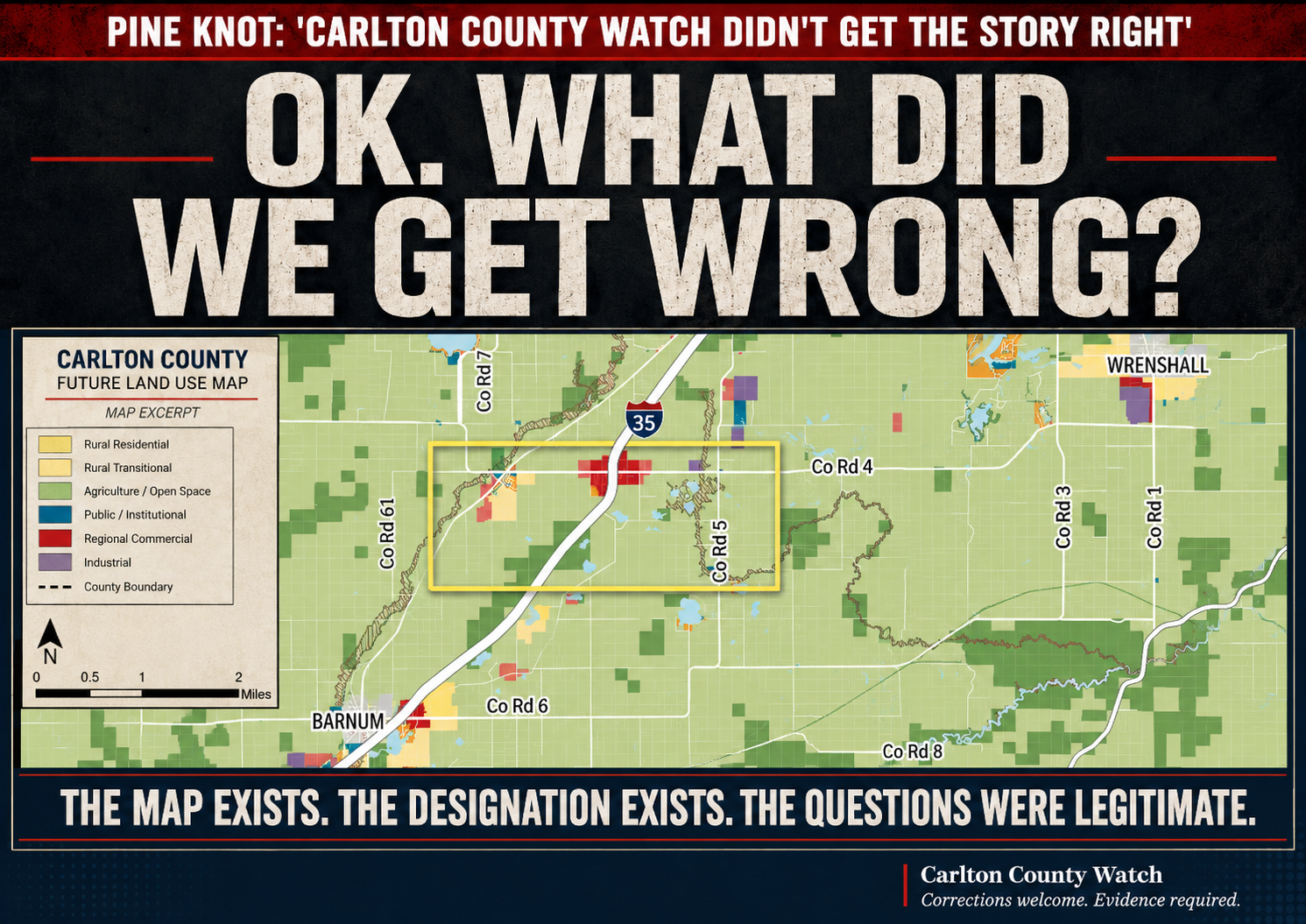
The future land-use map presented during that process showed property surrounding the rural Interstate 35/County Road 4 interchange near Mahtowa designated “regional commercial.”Pine Knot further described that designation as one that “often targets larger retailers, gas stations and hotels.”
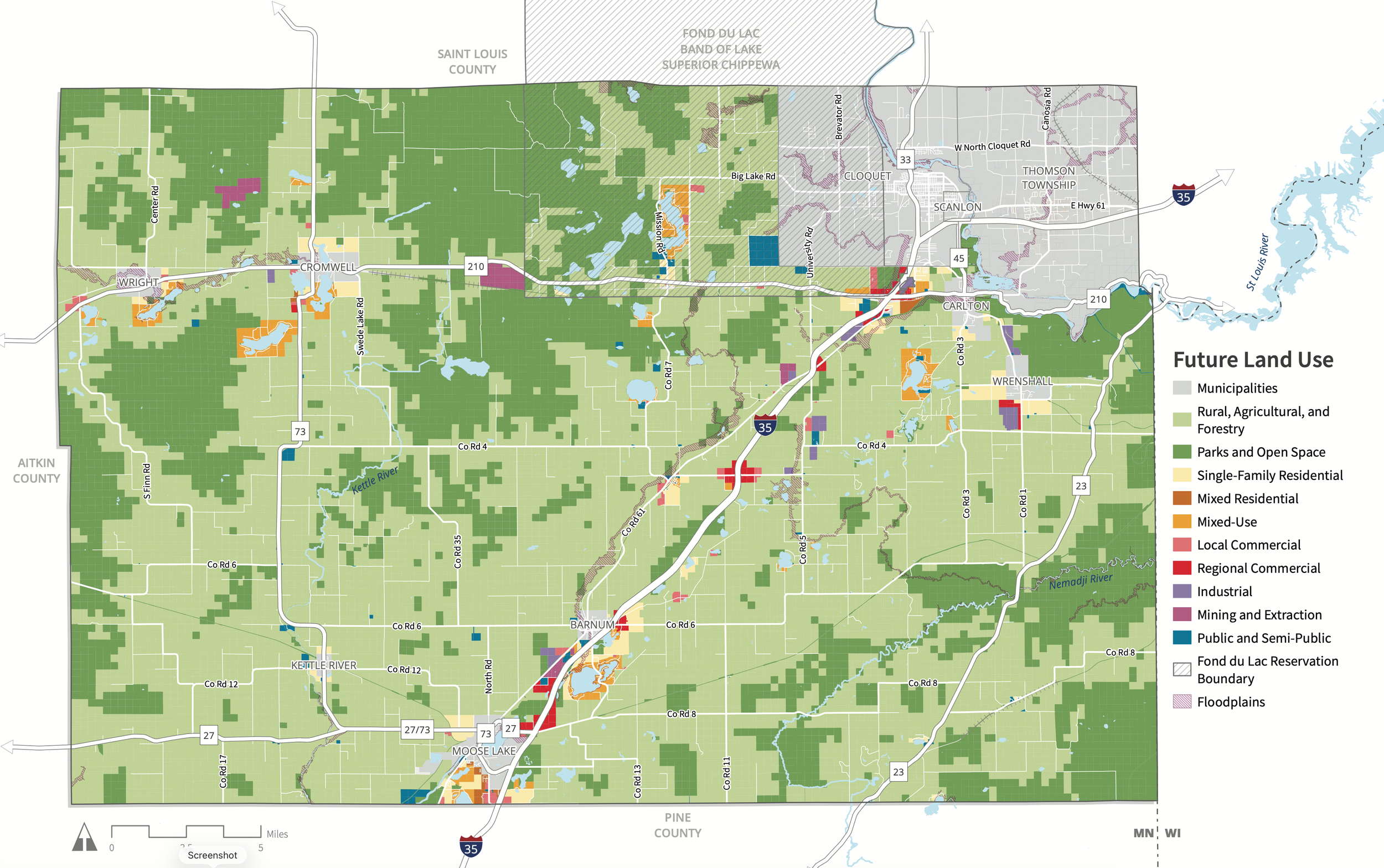
That is precisely why the map deserved public attention.
Carlton County Watch did not create the designation.
Carlton County Watch did not draw the map.
Carlton County Watch did not decide that farmland and residential property surrounding the County Road 4 interchange should appear within an area labeled “regional commercial.”
We reported that the designation appeared in planning materials being considered as part of Carlton County's 2050 planning process.
And Pine Knot's own reporting confirms that it did.
Preliminary Does Not Mean Irrelevant
County Administrator Dennis Genereau subsequently emphasized that the comprehensive plan remains a work in progress.
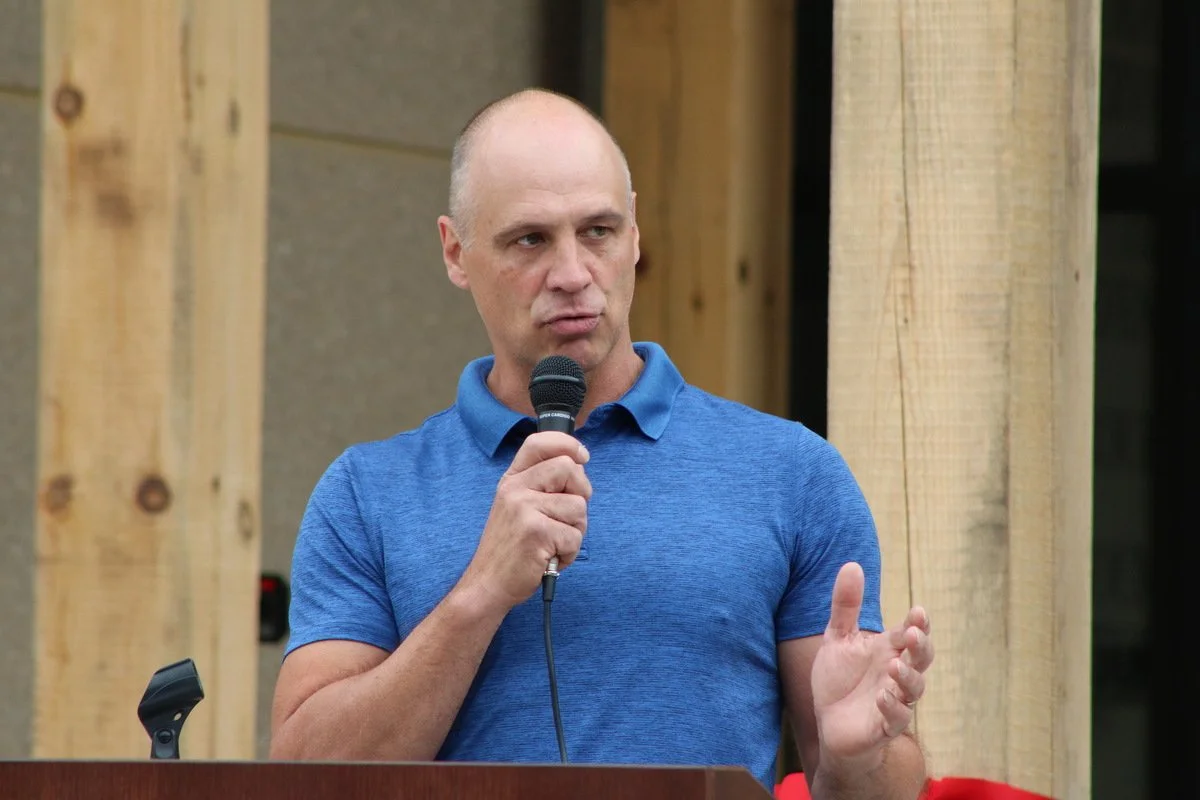
Carlton County Administrator Dennis Genereau, Jr. Source: Pine Knot Newspaper (Online)
That is important context, and Carlton County Watch has reported his subsequent statements.
According to Pine Knot, Genereau explained that Houseal Lavigne, the consulting firm working with the County, remained in the information-gathering phase and that the material presented August 5 reflected ideas the public had recommended for consideration during previous visioning sessions.
Genereau also sought to reassure residents that commercial development around County Road 4 was extraordinarily unlikely (but not impossible) in the foreseeable future.
He described the County Road 4 interchange as probably the last Interstate 35 interchange that would be developed and said he did not expect such development during his lifetime — even if he lived to 105. He identified other highway interchanges as substantially more likely candidates for development.
Carlton County Watch welcomes that clarification.
But clarification does not make the original question illegitimate.
If anything, the public discussion demonstrates exactly why citizens should examine planning documents before plans become final.
A preliminary plan is the point at which public scrutiny matters most.
Waiting until a land-use policy is final before asking questions would make public participation largely meaningless.
What, Exactly, Was Incorrect?
This brings us back to Pine Knot's assertion that Carlton County Watch “didn't get the story right.”
What didn't we get right?
Was the August 5 meeting held?
Yes.
Was Carlton County's 2050 Comprehensive Plan discussed?
Yes.
Was a preliminary future land-use map part of that process?
Yes.
Did that map identify land surrounding the County Road 4/I-35 interchange as “regional commercial”?
According to Pine Knot's own article, yes.
Are homes and farmland located around the interchange?
Pine Knot itself says they are.
Is the plan preliminary?
Yes — and Carlton County Watch has never suggested that bulldozers are arriving in Mahtowa tomorrow.
Has Genereau since said he believes development at that interchange is extremely unlikely for decades?
Yes.
Those two propositions can exist simultaneously:
The draft planning material showed a regional-commercial designation around County Road 4.
And:
The County Administrator says he does not expect that area to actually be developed for many decades, if ever.
Reporting the first does not become inaccurate because a government official later emphasizes the second.
Pine Knot Asked Who We Are. We Asked for a Factual Question.
There is another important part of this story.
On August 11, Pine Knot editor Jana Peterson contacted Carlton County Watch.
Her inquiry did not identify an inaccurate statement in the 2050 reporting. Instead, she asked who works at or writes Carlton County Watch's stories and, if Carlton County Watch would not identify its writers, why it would not do so.
Carlton County Watch responded the following morning.
We explained that we do not disclose the identities of individuals who research, write, edit, contribute information to, or otherwise assist with the publication.
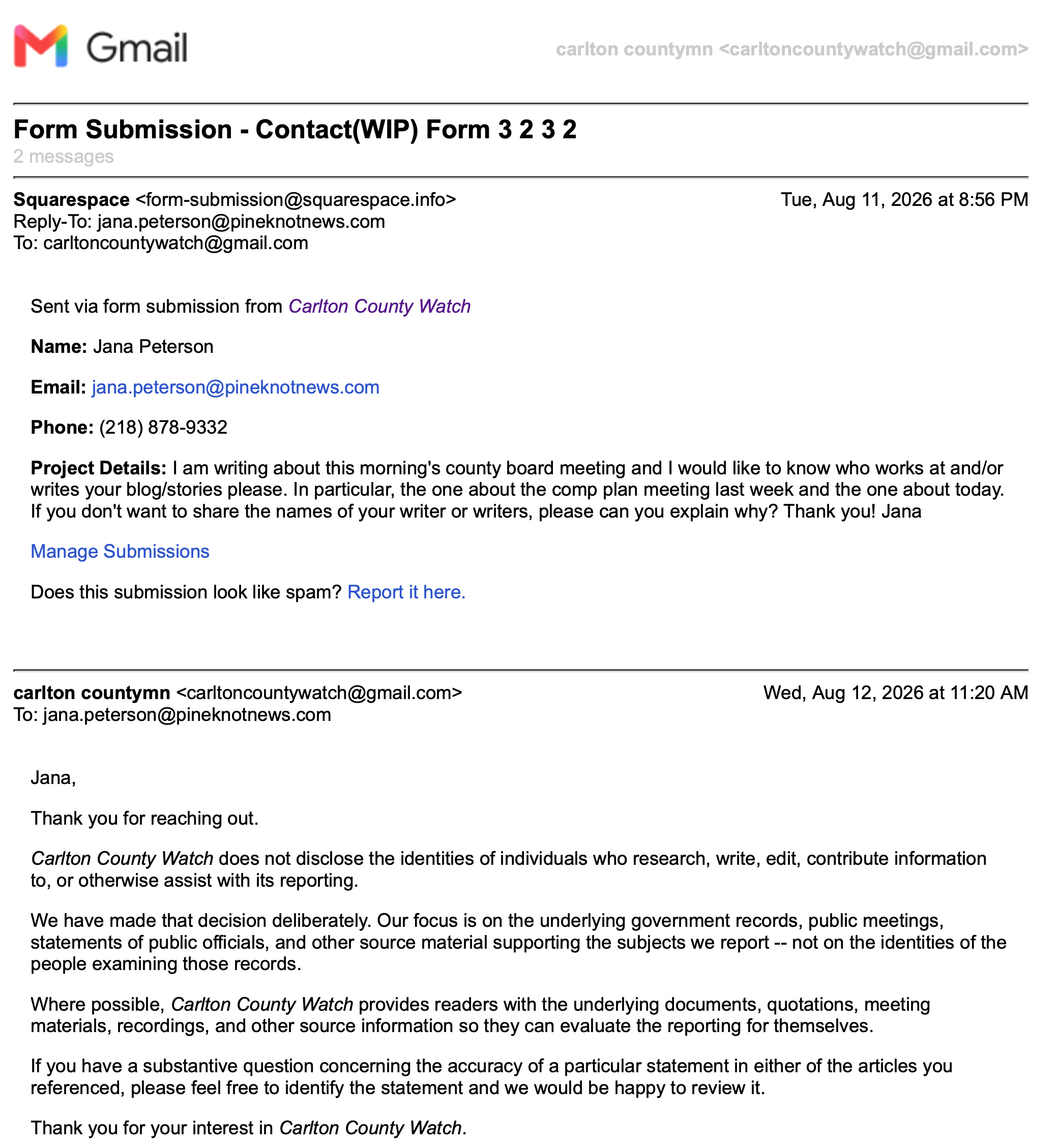
More importantly, we specifically invited Pine Knot to challenge the substance of our work:
If you have a substantive question concerning the accuracy of a particular statement in either of the articles you referenced, please feel free to identify the statement and we would be happy to review it.
That invitation remains open.
If Pine Knot believes Carlton County Watch reported a specific fact incorrectly, identify it.
If Carlton County believes Carlton County Watch reported a specific fact incorrectly, identify it.
If Houseal Lavigne believes we misunderstood something appearing in the planning materials, explain it.
Provide the document.
Provide the map.
Provide the recording.
Provide the quotation in context.
We will examine it.
And if Carlton County Watch got something factually wrong, we will correct it.
But saying reporting “didn't get the story right” is not the same as identifying an error.
This Is Not About “Social Media”
Pine Knot's article also reports Genereau warning residents not to rely upon social media for information concerning County government, saying that social media, in his experience, “doesn't get a lot of things right.”
That is a reasonable warning when applied to unsupported rumors circulating online.
But the reliability of reporting should not be determined by whether readers encounter it on paper, on a website, or through a social-media link.
It should be determined by its sources.
Carlton County Watch's approach is straightforward:
Government agendas.
Government maps.
Government recordings.
Government emails.
Public records.
Direct quotations from public officials.
And, wherever practical, links or copies allowing residents to examine the underlying material themselves.
A printed newspaper does not become accurate merely because ink was placed on paper.
An online publication does not become inaccurate merely because it is published electronically.
Evidence is evidence.
Asking Questions Is Not Spreading Misinformation
There is also a broader issue here.
The role of citizens and journalists in a comprehensive-planning process is not simply to wait for government officials to tell them what the finished plan will eventually say.
It is to look at the drafts.
Study the maps.
Attend the meetings.
Ask why particular areas have particular designations.
Challenge assumptions.
Request clarification.
And tell other residents what their government is considering.
That is not interference with the planning process.
That is the planning process.
Genereau himself told Pine Knot that the comprehensive plan is important and that the County needs to “do this the right way.”
Carlton County Watch agrees.
Doing it the right way requires public attention before decisions become permanent.
Something Important Has Already Happened
Whatever one's opinion of Carlton County Watch, the events of the past week demonstrate something important.
A government planning document received public attention.
Residents started asking questions.
The County Administrator responded publicly.
The Carlton County Watch (not others) reported extensively on the issue.
And residents now know considerably more about Carlton County's 2050 Comprehensive Plan than many did a week ago.
That is a good outcome.
Carlton County Watch does not need residents to agree with every question we ask.
We do not need county officials to like every article we publish.
We do not need other newspapers to approve of our reporting.
What we do expect — and what residents should expect from everyone participating in public debate — is that factual claims can be tested against the record.
Our Invitation Remains Open
So Carlton County Watch has a simple response to Pine Knot's assertion that we “didn't get the story right”:
Tell us what we got wrong.
Identify the sentence.
Identify the factual assertion.
Provide the contradictory government record.
We will publish a correction when a correction is warranted.
Until then, the relevant facts remain remarkably straightforward:
Carlton County's preliminary planning materials placed a “regional commercial” designation around the County Road 4/I-35 interchange.
Residents noticed.
They asked questions.
County officials responded.
And now considerably more people are paying attention to a government planning process that could influence Carlton County for decades.
That is not a problem with public scrutiny.
That is what public scrutiny is supposed to accomplish.